
 Tiếng Việt
Losing all your teeth not only makes eating and speaking difficult but also leads to jawbone loss and premature facial aging. Today, All-on-4 dental implants are considered an ideal solution for restoring a full arch of teeth while optimizing treatment costs and time. Let’s explore this treatment with My Smile Dental Clinic in the article below.
What Are Full-Arch All-on-4 Dental Implants?
The All-on-4 dental implant technique is a modern tooth replacement solution designed for people who have lost eight or more teeth or an entire arch of teeth. This technique uses four dental implants placed directly into the jawbone, creating a strong foundation to support a full set of fixed replacement teeth. By reducing the number of implants needed, this method minimizes surgical procedures, reduces discomfort, shortens treatment time, and significantly lowers overall costs.

Complete tooth loss is common among middle-aged and older adults due to the natural aging process. As tooth enamel and periodontal tissues become weaker over time, teeth are more likely to become infected, loosen, and eventually fall out if they are not treated promptly.
Losing all your teeth not only makes chewing and speaking more difficult but also causes rapid jawbone deterioration, directly affecting facial structure and overall health.
With the All-on-4 technique, the dentist places four implants in each dental arch. Two implants are inserted vertically in the front lateral incisor area, while the other two are placed at an angle in the premolar region and connected with multi-unit abutments. This technique is especially effective for the lower jaw and can support approximately 12 replacement teeth per arch.
In addition to restoring chewing ability to a level close to natural teeth, All-on-4 dental implants also help prevent jawbone loss, preserve facial contours, and provide outstanding durability. With proper care and regular dental check-ups, they can last for many years.

Compared with traditional solutions such as removable dentures or placing multiple individual implants, All-on-4 implant technology represents a major advancement in modern dentistry. It offers a strong, natural-looking, and cost-effective solution for people who have experienced long-term tooth loss.
Benefits of All-on-4 Dental Implants
Compared with traditional tooth replacement methods, All-on-4 dental implants offer many outstanding benefits, especially for patients who have lost all their teeth or have severe jawbone loss.
Fewer Implants and Less Discomfort
With the All-on-4 technique, only four dental implants are needed to support a full set of fixed teeth. As a result, the treatment process is much simpler, requires less invasive surgery, reduces swelling and discomfort after implant placement, and lowers the overall cost compared with placing multiple individual implants.

Effectively Prevents Jawbone Loss
When all teeth are missing, the jawbone no longer receives the stimulation created by chewing, causing it to shrink over time. This can make the face appear sunken and may increase the risk of temporomandibular joint (TMJ) disorders.
All-on-4 implants replace the missing tooth roots and provide natural stimulation to the jawbone. This helps slow down and prevent bone loss, maintaining a balanced facial appearance and preserving natural facial contours.
Restores Chewing Function Similar to Natural Teeth
After the final restoration is completed, an All-on-4 prosthesis provides excellent stability, allowing patients to chew comfortably and enjoy the full taste of their favorite foods.
Restoring a complete set of teeth also helps reduce digestive problems and contributes to better overall health.
Improves Facial Appearance
Besides restoring oral function, All-on-4 dental implants recreate a beautiful, natural-looking smile. They also support the lips and cheeks, resulting in a more balanced smile and a younger-looking appearance.
Outstanding Durability and Long-Term Use
Unlike removable dentures, which usually last only a few years, All-on-4 dental implants are highly durable. They typically have a lifespan of more than 20 years and can even last much longer with proper oral hygiene and regular dental check-ups.
Despite these significant advantages, All-on-4 implants also have some limitations. The initial investment is relatively high, and successful treatment requires an experienced implant dentist as well as modern equipment and advanced technology to ensure accuracy and safety throughout the procedure.
Limitations of All-on-4 Full-Arch Dental Implants
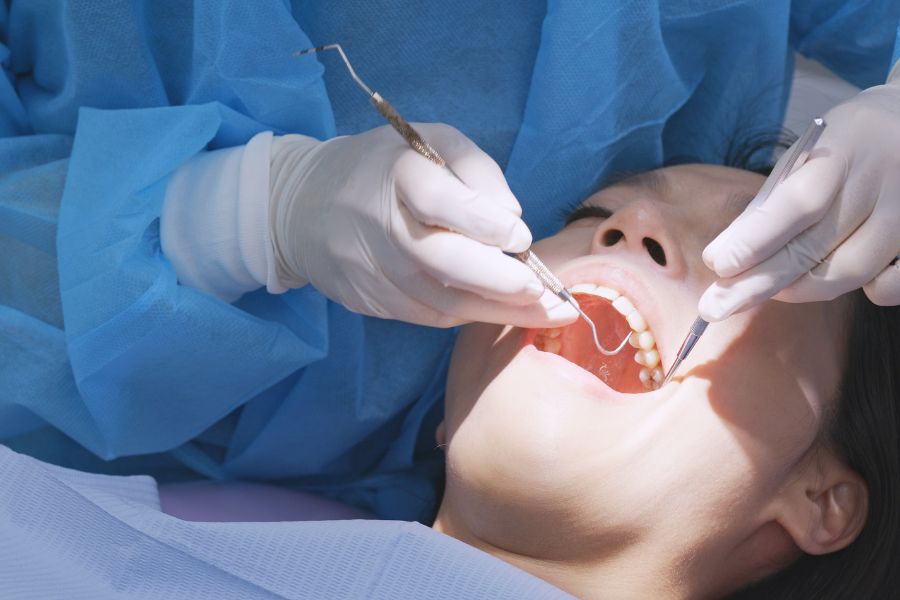
In addition to its outstanding benefits, All-on-4 dental implants also have several important considerations that you should keep in mind before starting treatment.
Requires a Highly Skilled Implant Dentist
The All-on-4 implant technique is a complex procedure that requires a dentist with advanced expertise and extensive clinical experience in dental implant surgery. Performing the procedure correctly not only ensures a safe treatment process but also minimizes the risk of complications and implant failure in the future.
Requires Advanced Equipment and Modern Technology
Compared with traditional tooth replacement methods such as dental bridges or removable dentures, All-on-4 implants require advanced equipment and modern technology to ensure accuracy throughout every stage of the implant procedure.
With the support of modern technology, treatment time can be shortened, surgical trauma is minimized, and discomfort after implant placement is significantly reduced.
Are All-on-4 Dental Implants Painful? How Long Do They Last?
After All-on-4 implant surgery, patients may experience mild swelling, but the level of pain is usually minimal. This is because the missing teeth have already caused the sensory nerve endings in that area to become much less sensitive.
In addition, the procedure is minimally invasive, usually does not require bone grafting, and the surgical sutures place very little pressure on the gum tissue. As a result, discomfort after treatment is kept to a minimum.
Compared with traditional tooth replacement options such as dental bridges or removable dentures, dental implants offer exceptional durability. When high-quality implant fixtures are used and the procedure is performed by an experienced implant dentist, dental implants can remain stable for 20 to 30 years, or even last a lifetime with proper care, good oral hygiene, and regular dental check-ups.
How Much Do All-on-4 Dental Implants Cost?
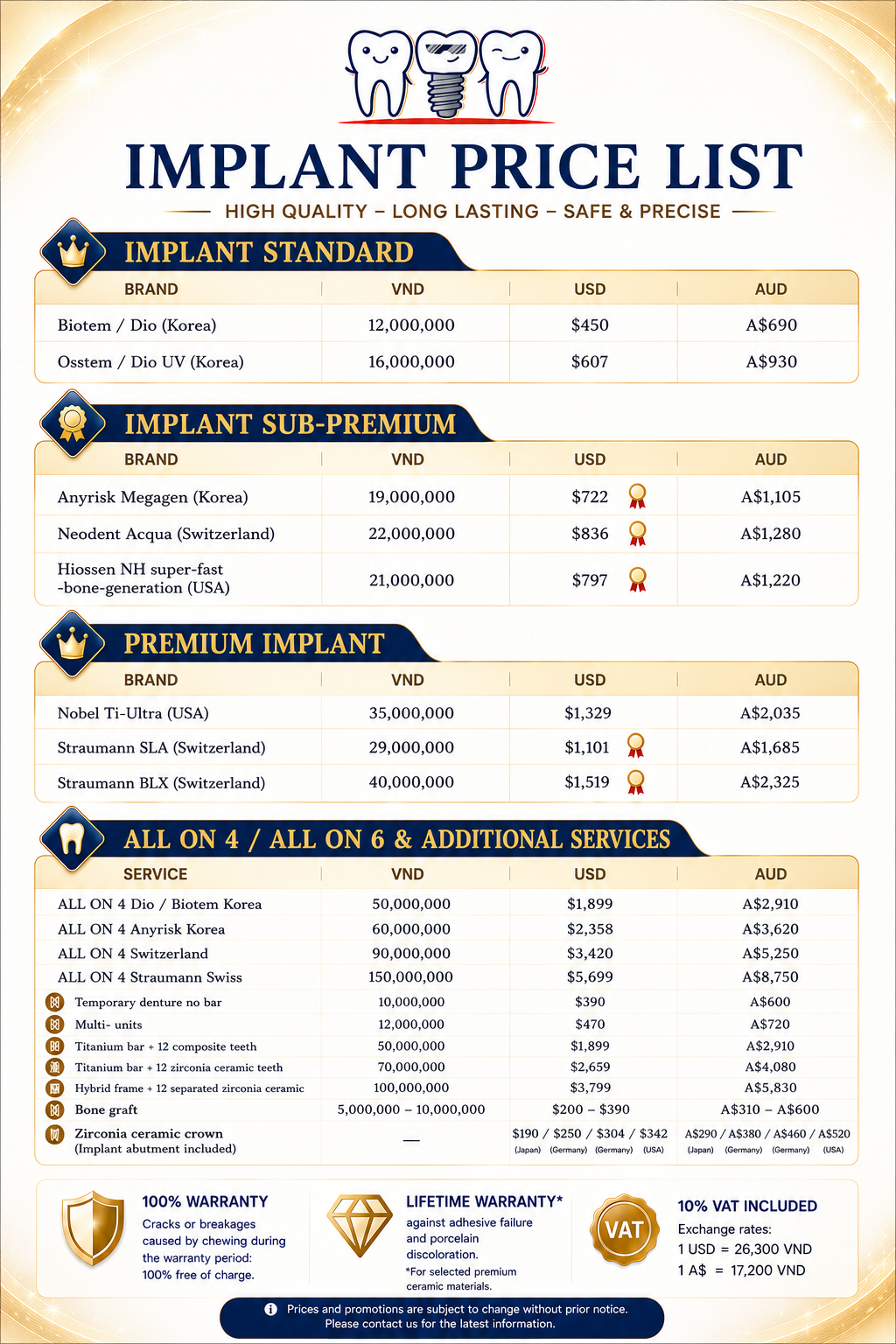
The cost of All-on-4 dental implants typically ranges from VND 160 million to VND 240 million per arch, including the abutments and the complete fixed porcelain restoration.
The exact cost may vary depending on the implant brand, country of manufacture, the type of restoration material selected, the dentist’s experience, and the technology available at each dental clinic.
My Smile Dental Clinic All-on-4 Implant Price List:
Factors That Affect the Cost of All-on-4 Dental Implants
Jawbone Condition
When teeth have been missing for a long time without timely replacement, the jawbone gradually loses both volume and density.
In these situations, additional procedures may be required before implant placement to ensure that the implants achieve strong stability and successful integration with the jawbone.
- Bone grafting: If severe jawbone loss has occurred, the dentist may use the patient’s own bone or artificial bone material to rebuild enough bone volume for implant placement.
- Sinus lift: For the upper back teeth, if the maxillary sinus is positioned too low and there is not enough bone height for implant placement, a sinus lift procedure may be performed to increase the available bone volume.
Type of Dental Implant Used
For an implant to fuse securely with the jawbone, the most important factor is the quality of the implant itself.
The implant should have a clear origin, be made from safe materials, and offer excellent biocompatibility to reduce the risk of infection, pain, or complications after surgery.
On the other hand, low-quality or inexpensive implants often do not integrate well with the jawbone. They are more likely to fail, cause prolonged bleeding, be rejected by the body, and increase the risk of implant treatment failure.
Type of Restoration Material
Premium dental restorations such as Zirconia or full-contour ceramic crowns offer excellent durability, superior aesthetics, and high chewing strength. Therefore, they are generally more expensive than standard restoration materials.
The most suitable material should be selected based on your treatment needs, budget, and current oral health condition.
Dentist’s Experience
Dental implant treatment requires a high level of precision, so patients should choose a dentist with specialized training and extensive clinical experience. Creating a personalized treatment plan and placing each implant in the correct position and angle are essential for achieving stable integration with the jawbone.
This is one of the most important factors affecting the long-term success, durability, and lifespan of dental implants, so it should never be overlooked.
Dental Clinic
The cost of dental implants may vary from one dental clinic to another. However, instead of focusing only on price, you should choose a reputable clinic that operates transparently, has experienced implant dentists, and is equipped with modern technology and advanced facilities.
Dental clinics that are trusted by many patients and receive consistently positive reviews are more likely to provide a safe implant procedure and deliver long-lasting, reliable restoration results.
All-on-4 Full-Arch Dental Implant Procedure at My Smile Dental Clinic Da Nang

Step 1: Comprehensive Examination and 3D Cone Beam CT Scan
The dentist begins with a comprehensive oral examination to assess your overall dental condition. A 3D Cone Beam CT scan is then performed to evaluate the jawbone structure, nerve pathways, and maxillary sinuses, allowing the dentist to accurately determine your bone density and overall bone condition.
Step 2: Create a Personalized Treatment Plan and Implant Placement Plan (If Needed)
Based on the information obtained from the 3D images, the dentist uses specialized planning software to create a detailed implant treatment plan.
At this stage, the dentist carefully identifies the four ideal implant positions in the jawbone and calculates the most suitable implant angle and depth to achieve maximum stability.
If the patient has oral conditions such as periodontal disease or severe jawbone loss, the dentist may recommend additional treatment or bone grafting (if necessary) before proceeding with the implant surgery.
Step 3: Oral Cleaning, Local Anesthesia, and Surgical Site Preparation
To ensure a smooth procedure and minimize the risk of infection, the patient’s mouth is thoroughly cleaned and disinfected before surgery.
The dentist then administers local anesthesia to eliminate pain and discomfort during the procedure. All instruments and surgical equipment are fully sterilized according to strict Ministry of Health standards to minimize the risk of post-operative complications.
Step 4: Place Four Dental Implants into the Jawbone
This is the most important step of the entire treatment process. The dentist surgically places four dental implants into the jawbone according to the personalized treatment plan. Typically, two implants are placed vertically in the front of the jaw, while the two posterior implants are inserted at an angle of approximately 45 degrees.
This angled placement technique allows the dentist to maximize the use of the strongest areas of the jawbone, reduce or even eliminate the need for bone grafting, and create a stable foundation capable of supporting the entire full-arch restoration.
Step 5: Attach Temporary Teeth and Prepare for the Final Restoration
After the implants have been placed, the dentist takes impressions of the patient’s dental arch and attaches a temporary fixed restoration. The temporary teeth not only restore the patient’s appearance and confidence when speaking but also allow for light chewing during the healing period. Early placement of temporary teeth also helps shape the gum tissue properly and prepares the mouth for the final permanent restoration.

Step 6: Follow-Up Visits and Monitor Osseointegration
Over the next 3 to 6 months, patients return to the clinic for scheduled follow-up appointments.
During these visits, the dentist monitors the healing of the gum tissue and evaluates how well the implants are integrating with the jawbone using X-ray imaging.
This healing period is extremely important because the implants must become completely fused with the jawbone, forming strong artificial tooth roots before they can safely withstand full chewing forces.
Step 7: Attach the Permanent Fixed Prosthesis
Once the dental implants have fully integrated with the jawbone and become completely stable, the dentist removes the temporary restoration and replaces it with the permanent porcelain prosthesis.
The final restoration is custom-designed to match each patient’s facial features, ensuring an accurate bite, natural tooth color, and exceptional durability. After the permanent teeth are attached, patients receive a strong, beautiful new smile that restores more than 90% of natural chewing function while providing an appearance that closely resembles natural teeth.
Get Full-Arch All-on-4 Dental Implants in Da Nang
My Smile Dental Clinic is a leading center for advanced dental implant and orthodontic treatment in Da Nang, trusted by both local and international patients. With a team of experienced dentists and a modern digital dentistry system, My Smile has successfully completed hundreds of All-on-4 full-arch dental implant cases, helping patients restore their chewing function, improve their appearance, and enjoy a better quality of life.

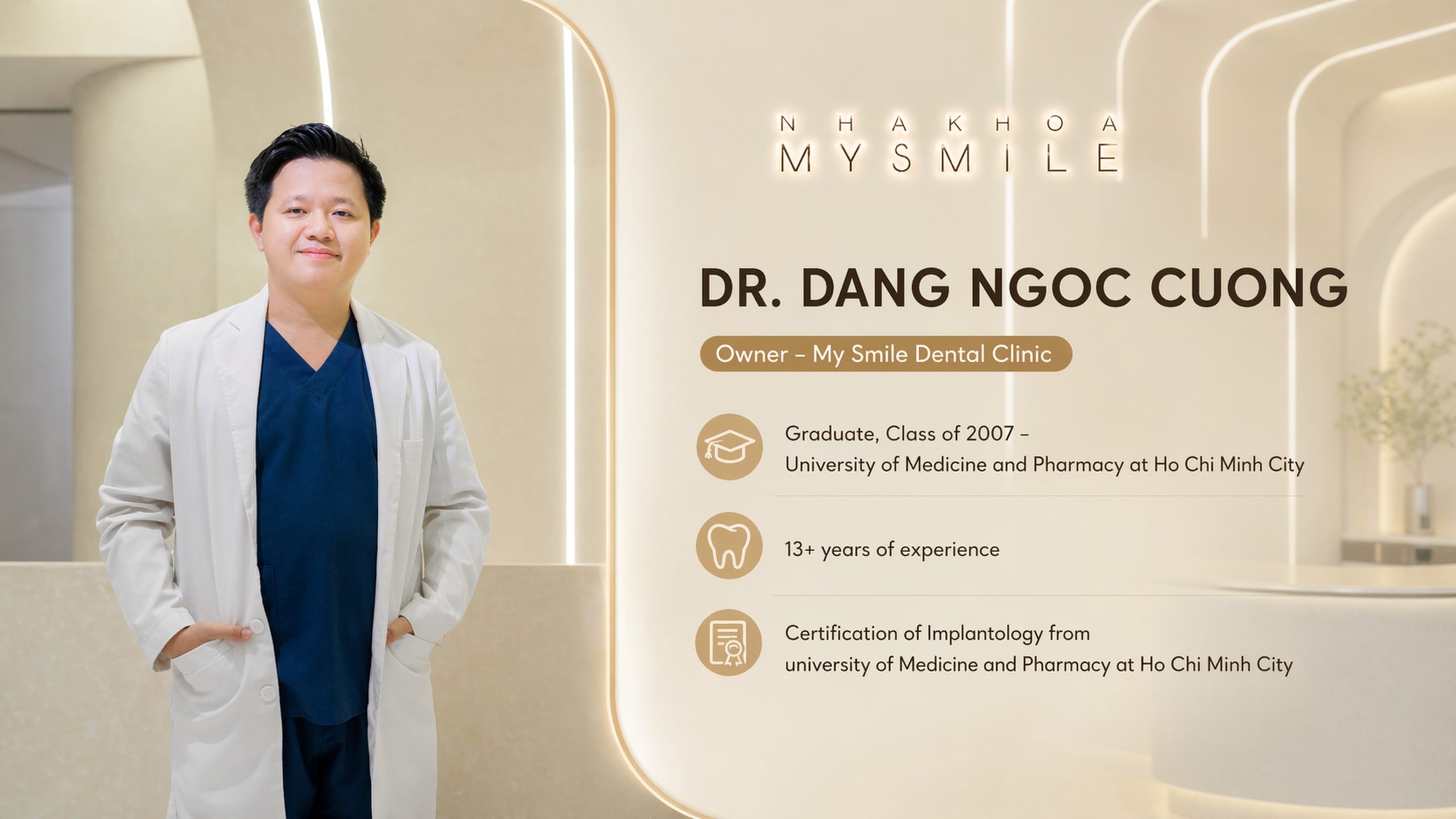
At My Smile Dental Clinic, every All-on-4 full-arch implant treatment follows a well-planned and personalized process tailored to each patient’s individual needs. From the initial consultation and treatment planning to the implant surgery, every step is personally performed by Dr. Dang Ngoc Cuong, DDS, Specialist Level I, a graduate of the University of Medicine and Pharmacy at Ho Chi Minh City with many years of specialized experience in dental implantology.
To ensure accurate and safe treatment outcomes, My Smile has invested in a complete digital dentistry system, including the KaVo 3D Cone Beam CT scanner (Germany), the iTero Lumina intraoral scanner (USA), the Shining 3D Implant Navigation System, and CAD/CAM digital dental restoration technology. These advanced technologies allow dentists to accurately evaluate the jawbone, digitally plan the ideal implant positions, and fabricate highly precise restorations. As a result, treatment time is shortened, implant integration with the jawbone is improved, and patients receive durable, natural-looking teeth with an excellent fit.
In addition, My Smile Dental Clinic offers a 0% interest installment plan for dental implant treatment, making modern full-arch tooth replacement more affordable without creating financial pressure. The promotion includes:
- Initial payment starting from only VND 3,000,000, with the remaining balance payable through 0% interest installments over 6–8 months.
- Free consultation and 3D Cone Beam CT scan.
- The dentist personally performs the consultation, treatment planning, and implant surgery.
- A personalized treatment plan with dedicated follow-up care and post-implant support.
- A commitment to using genuine dental implants with clear product origins and a transparent warranty policy.
With a highly experienced team of dentists, state-of-the-art digital technology, and flexible financing options, My Smile Dental Clinic is a trusted destination for All-on-4 full-arch dental implants in Da Nang. The clinic is committed to helping patients regain a natural smile, restore strong chewing function, and maintain long-term oral health.